
Harris County Criminal Court Records
A criminal court record is the court case file, not just the arrest event. In Harris County, felony criminal cases and probation revocations are Superior Court matters. The District Attorney represents the State in Superior Court criminal cases and in appeals from Superior Court to Georgia appellate courts. The Clerk of Superior Court files criminal cases, keeps the docket, and is the contact for case records and certified copies when the file is not fully available online.
Magistrate Court is still part of the criminal path. It issues arrest warrants, conducts first appearances, and handles certain lower-level criminal matters such as misdemeanor bad checks, criminal trespass, under-21 alcohol violations, shoplifting, and possession of marijuana less than one ounce. A person may have an arrest, a first appearance, and a preliminary hearing before a felony case is bound over to Superior Court. For a closer look at charges after arrest, use the Harris County arrest records and court charges page.
Search Harris County Criminal Cases
The local starting point is the Clerk of Superior Court and the clerk website's Case Search link. If the case does not appear online, call the clerk's office and ask which criminal division contact holds the file. GSCCCA identifies Criminal Division and Juvenile Court contacts in the clerk profile, but juvenile records are not treated as broadly public. For current custody or booking information, use sheriff or jail channels instead of assuming the court docket will show housing details.
- Start with the defendant name, case number, approximate charge date, or court notice.
- Check the clerk website's Case Search link for Superior Court criminal case activity.
- Review the docket for arraignment, motions, plea, disposition, sentence, and probation or revocation entries.
- Call the Clerk of Superior Court if a file is older, sealed, restricted, juvenile, or missing from the online result.
- Request certified copies directly from the clerk when the record will be used for court, licensing, or official purposes.
The official Georgia Code public-access portal is a legal source for the state statutes that shape public access.
That code portal supports the access-law discussion, but local Harris County criminal case copies still come from the court clerk that keeps the file.
Harris County Criminal Case Flow
A felony case often starts with arrest and first appearance, then moves into Superior Court after prosecution begins. The sheriff jail FAQ says a preliminary hearing usually happens within two weeks when bond is not made or granted, may be held by Zoom at the Harris County Jail, and can bind a case over to Harris County Superior Court if probable cause is found. The court record grows as the case moves through hearings, filings, plea discussions, trial settings, and sentencing.
Case flow: Charges Filed › Arraignment › Pretrial / Motions › Plea or Trial › Disposition › Sentencing
| Stage | What Happens |
|---|---|
| Charges filed | The prosecutor or grand jury moves the case into a formal charging document. |
| Arraignment | The defendant is advised of the charge and enters a plea. |
| Pretrial and motions | The parties file requests, set hearings, exchange issues, or seek continuances. |
| Plea or trial | The case ends by plea, bench trial, jury trial, dismissal, or other disposition. |
| Sentencing | The court enters punishment, probation, costs, restitution, or other conditions after conviction. |
The Harris County Sheriff's Office website is relevant to arrest and custody stages before or alongside the court file.
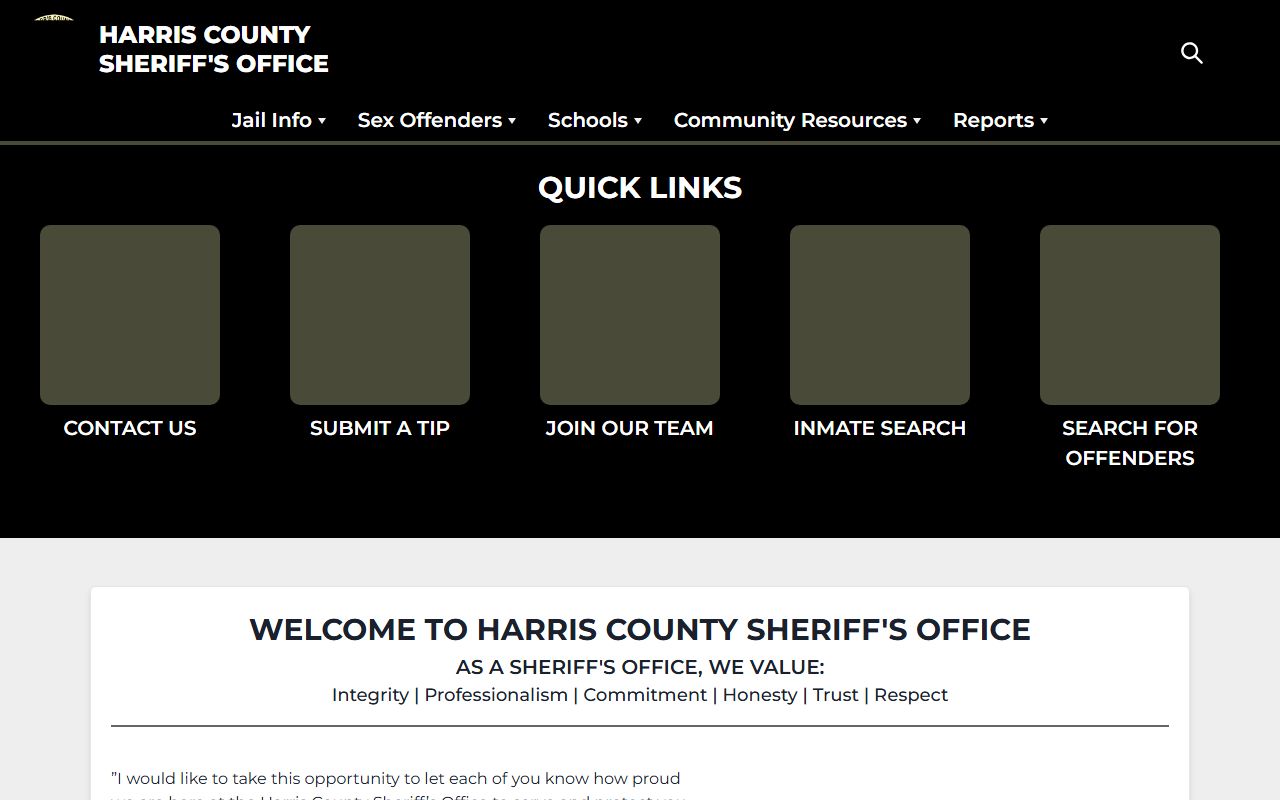
Sheriff custody data can explain why a case is moving, but the criminal court record and final disposition remain court records.
What Harris County Criminal Records Show
A Harris County criminal court record may show the defendant, charge descriptions, offense or filing dates, accusation or indictment references, bond events, arraignment, pleas, motions, orders, disposition, sentence, probation, and revocation activity. The exact fields depend on the court record system and whether any record is restricted. The research did not verify a public sample criminal docket entry, so use clerk verification before treating online data as complete.
| Field | What It Shows |
|---|---|
| Case number | The Superior Court or lower-court identifier for the criminal file. |
| Defendant | The person charged in the court case. |
| Charging document | The accusation, indictment, or other filing that states the formal charge. |
| Charge description | The offense name and, when available, severity or statute reference. |
| Plea | The defendant's formal answer, such as guilty, not guilty, or nolo contendere if entered. |
| Disposition | The case or charge outcome, such as guilty, dismissed, acquitted, or nolle prosequi. |
| Sentence | Jail, prison, probation, fine, costs, restitution, or other court-ordered terms after conviction. |
Charges vs Convictions
A charge is an accusation filed in court. A conviction is a final outcome after a guilty plea, guilty verdict, or other conviction entry. Harris County criminal court records can show charges that were amended, dismissed, reduced, or ended without conviction. For that reason, a search result should be read by charge status and disposition, not just by the presence of an offense name.
| Charge | Conviction | |
|---|---|---|
| Stage | Filed before the final outcome. | Entered after plea or verdict. |
| Meaning | An allegation the State must prove. | A court outcome that the person was found or pleaded guilty. |
| Record effect | May remain visible with status notes. | May affect sentence, probation, and state criminal history. |
| Best check | Read charge status and disposition. | Read the sentencing and judgment entries. |
Reading Dispositions and Sentences
Disposition is the current or final outcome. In a Harris County criminal record, it may show that a charge was dismissed, nolle prossed, reduced, ended by plea, resolved after trial, or moved into sentencing. Sentence entries may list jail or prison time, probation, fines, court costs, restitution, revocation terms, or other conditions. A bond entry is not a sentence, and a preliminary hearing result is not the final Superior Court outcome.
Probation revocation is also important in Superior Court. The county Superior Court page identifies probation revocations as part of Superior Court work. A revocation entry may concern a past sentence rather than a new arrest alone. If an entry is unclear, ask the Clerk of Superior Court for the file or contact counsel, because docket shorthand can be too brief for legal decisions.
Sealed vs Restricted Records
Georgia commonly uses the term record restriction for criminal-history access limits. The GBI explains that O.C.G.A. 35-3-37 permits restriction of eligible criminal history records for non-criminal-justice purposes. Court-file sealing and state criminal-history restriction are related but not identical. A person may need to contact the prosecutor, arresting agency, and court clerk depending on the arrest date and record type.
| Sealed Court Record | Restricted Criminal History | |
|---|---|---|
| What changes | Public access to the court file is limited by court order or rule. | Access to eligible criminal-history data is limited for non-criminal-justice purposes. |
| Who to contact | The Clerk of Superior Court or the court that entered the order. | The prosecutor for post-July 1, 2013 arrests or the arresting agency for older arrests. |
| Law source | Court rules, statutes, and sealing orders. | O.C.G.A. 35-3-37 and GBI procedure. |
| Practical limit | Some agencies may still have access where law allows. | The court docket may need separate review. |
The GBI record-restriction page explains the state criminal-history restriction route.
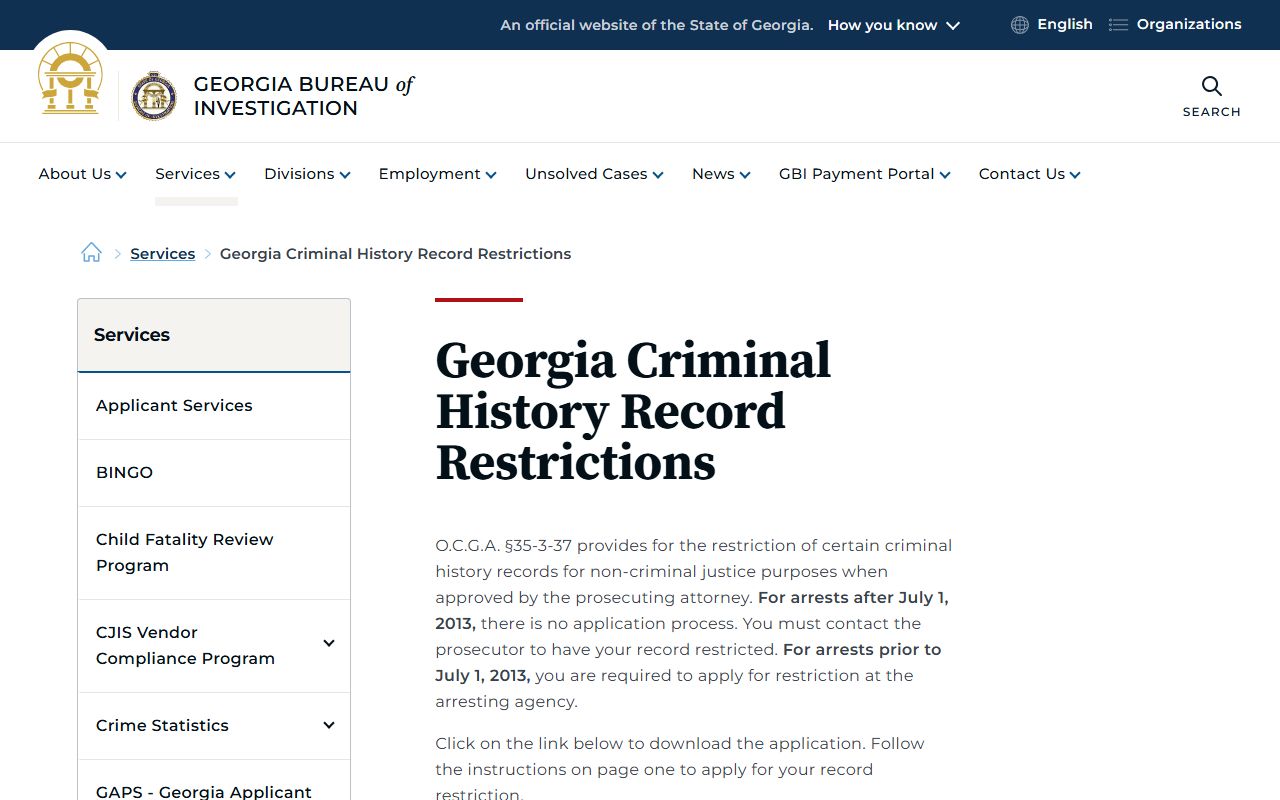
The GBI process is important, but a Harris County court file may still require separate clerk or court review.
Public Access to Criminal Records
Georgia public access starts with the Open Records Act and court-record rules, then narrows for sealed, juvenile, adoption, victim-sensitive, medical, mental-health, and other restricted material. O.C.G.A. 50-18-70 through 50-18-77 applies to public records unless exempted by law. Uniform Superior Court Rule 21 states the public nature of court records unless law or rule limits access. O.C.G.A. 35-3-37 controls many criminal-history restriction questions.
Key access rules:
O.C.G.A. 50-18-70 through 50-18-77 presumes public records are available unless a specific law or order applies.
O.C.G.A. 35-3-37 gives the record-restriction path for eligible Georgia criminal-history records.
The sheriff accident and incident report instructions are a separate agency-record channel that may relate to a criminal case.
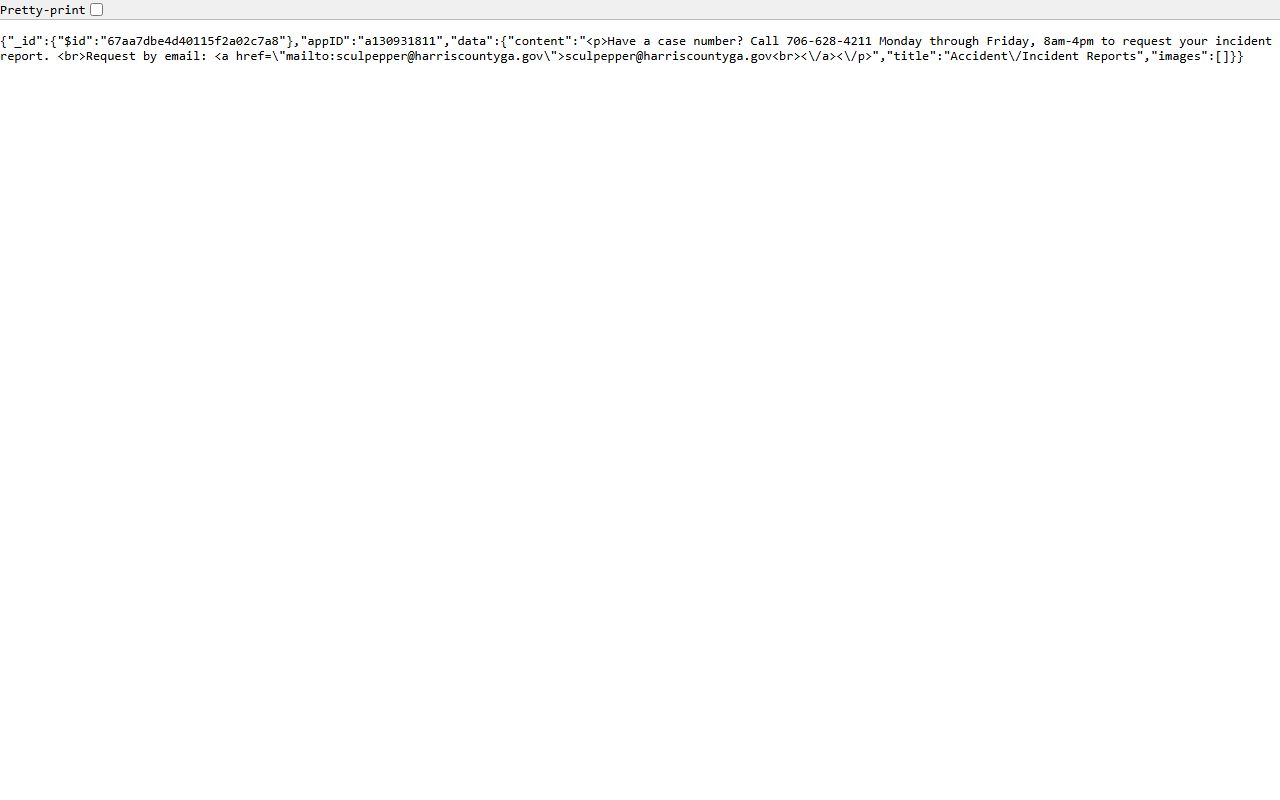
Agency reports can help explain an arrest or incident, but the criminal court record controls court filings and final case outcome.
Criminal Record Research Limits
Some criminal matters involving Harris County residents may be federal, not county court cases. Federal records are searched through PACER and federal court systems, not the Harris County Clerk of Superior Court. Free legal research services may help identify federal opinions or docket references, but they do not replace certified county copies or the Superior Court file.
The CourtListener reference source appears in the criminal record image set as a legal research aid.
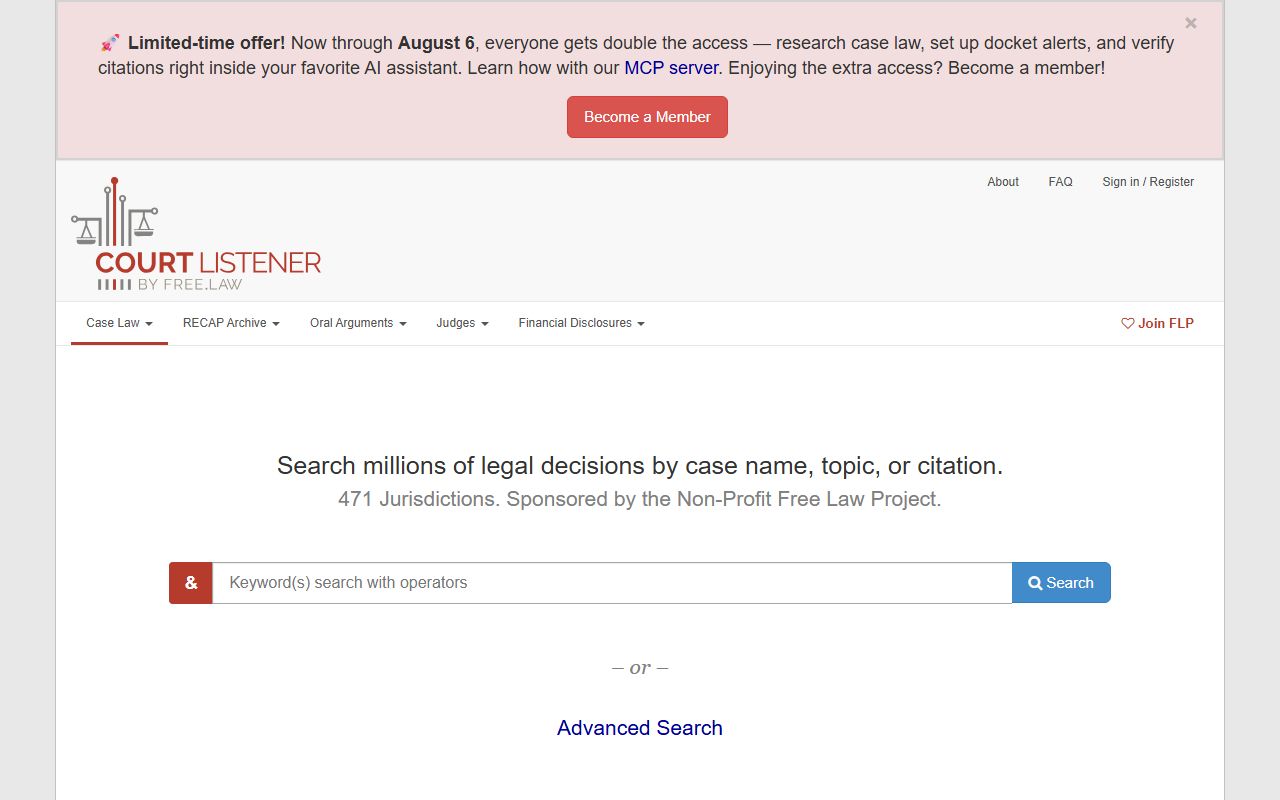
Use that kind of source for broad research only. Local Harris County criminal court records should be verified with the court that owns the file.
Restricted Harris County Criminal Records
Juvenile matters, sealed criminal files, adoption-linked proceedings, mental-health-related filings, and protected personal identifiers may be restricted or redacted. The Clerk of Superior Court should be contacted for Superior Court file access, while the prosecutor or arresting agency may be part of criminal-history restriction depending on the arrest date. Do not assume a public index result is complete, final, or safe to use for regulated screening.
Important: Criminal court lookups are not a substitute for FCRA-compliant background screening or certified clerk records.